To achieve Agility in manufacturing – embrace Variability – Part 1
Posted 1893 days ago


Deliver connected, responsive, and agile operations by linking data, AI, and teams for confident, real-time decisions across plants.










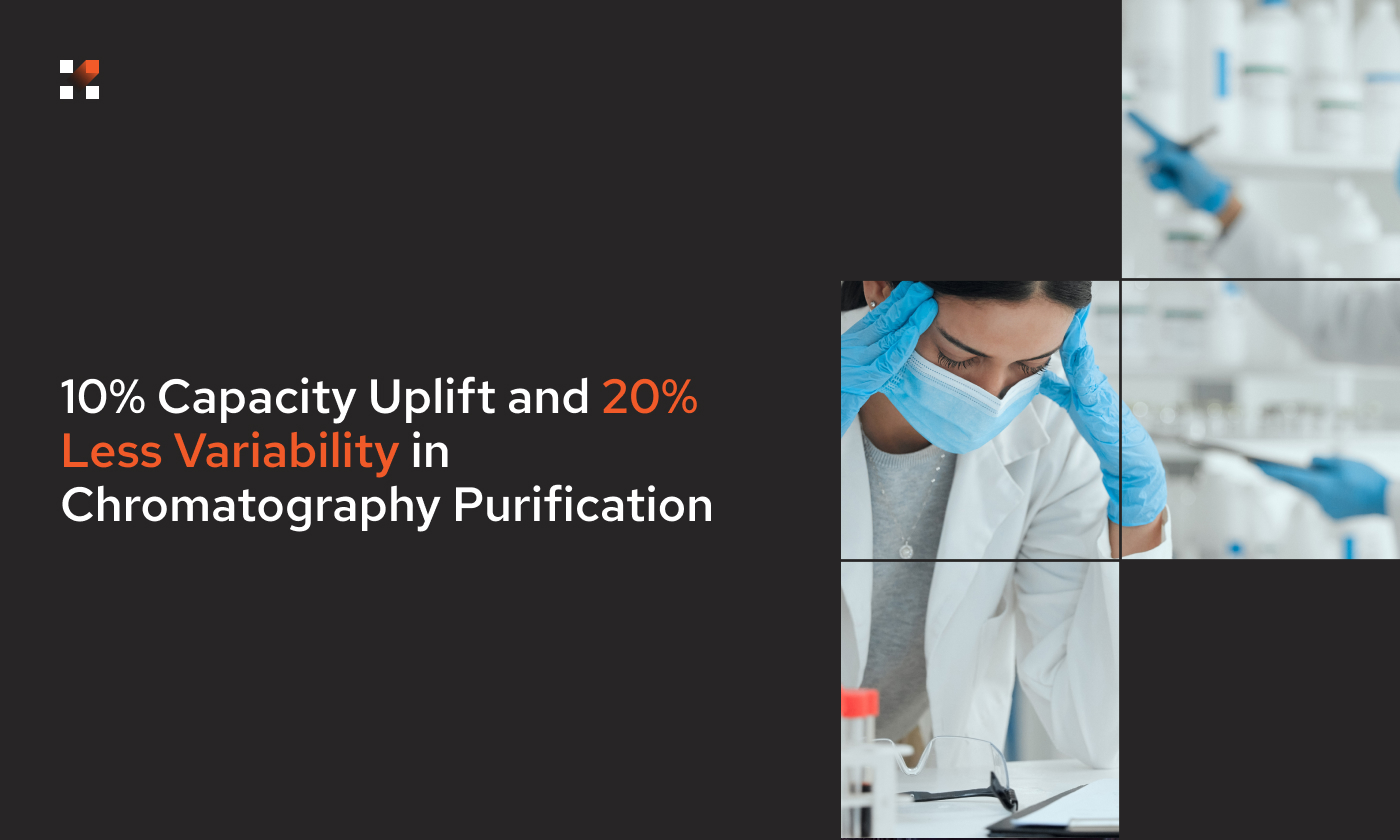
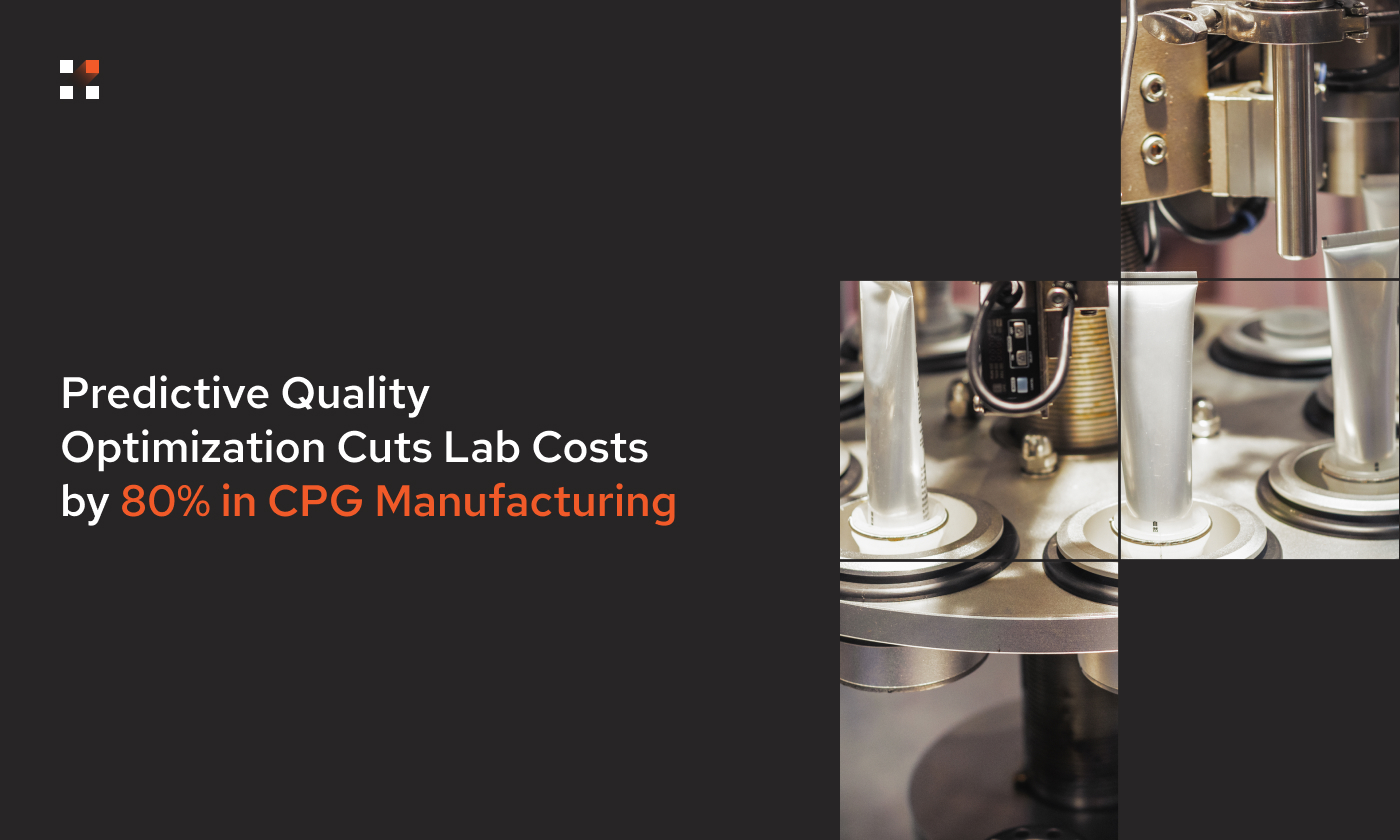

See how Quartic helps manufacturers cut costs, improve quality, and boost throughput across Life sciences, Chemicals, CPG, and more.

Access technical guides, case studies, and best practices to make faster, more confident manufacturing decisions.

Smarter manufacturing, one decision at a time.
Disconnected systems with stranded data make decision-making slow, manual, and subjective in batch manufacturing.
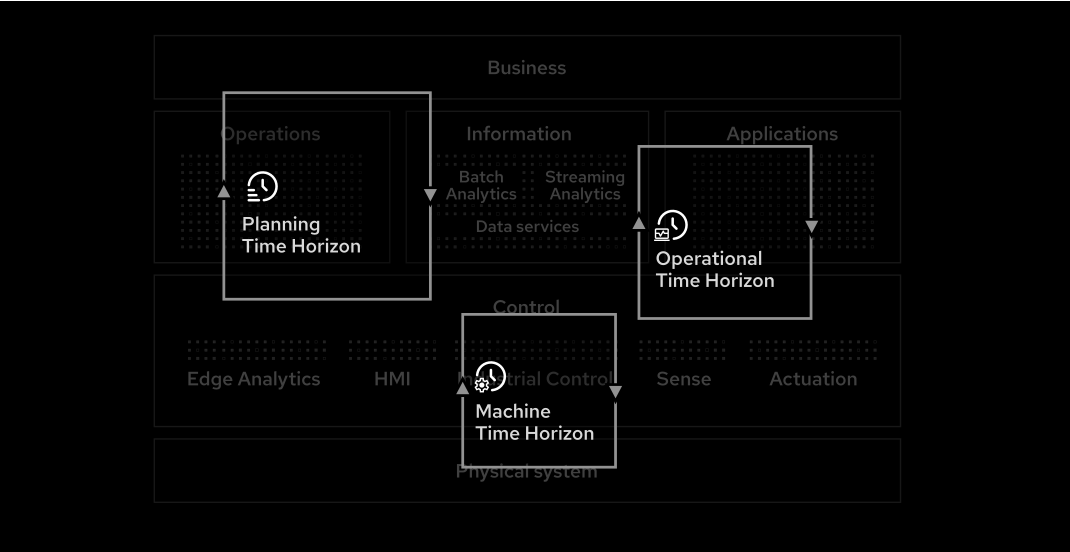
Siloed legacy systems inhibit access to valuable data.
Operators rely on lengthy manual processes to make decisions.
Legacy MOM systems lack flexibility to fit into modern architectures.
Difficult to expand capabilities without full overhauls.
Real-time visibility, predictive insights, and automated actions are now table stakes for competitiveness.
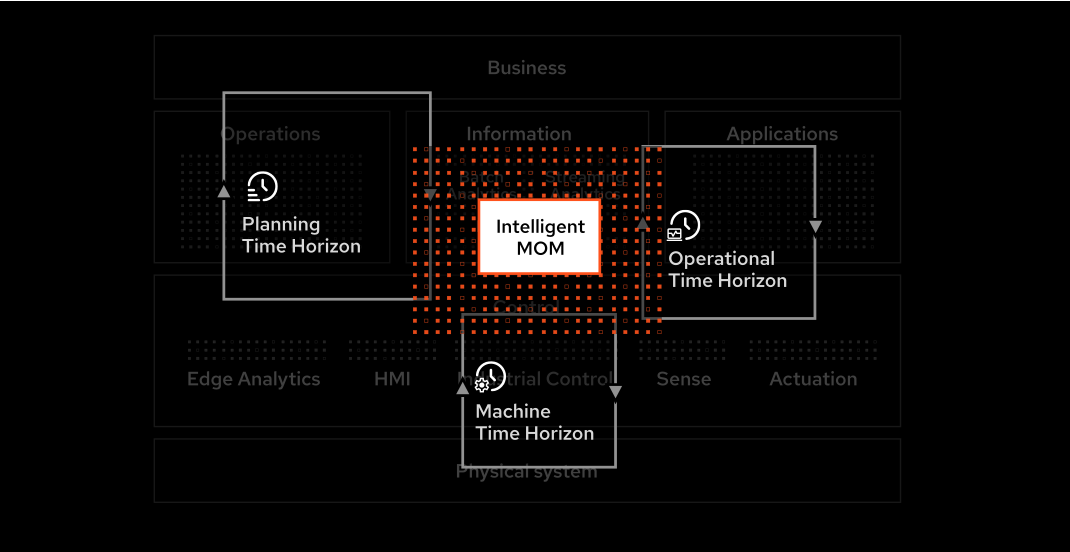
Give meaning to OT, Quality, and IT data in the context of operations.
Spot quality deviations and production bottlenecks before they impact output.
Enable the front-line operators with AI-assisted decision guidance.
Adapt faster to shifting batch sizes, new recipes, and supply volatility.
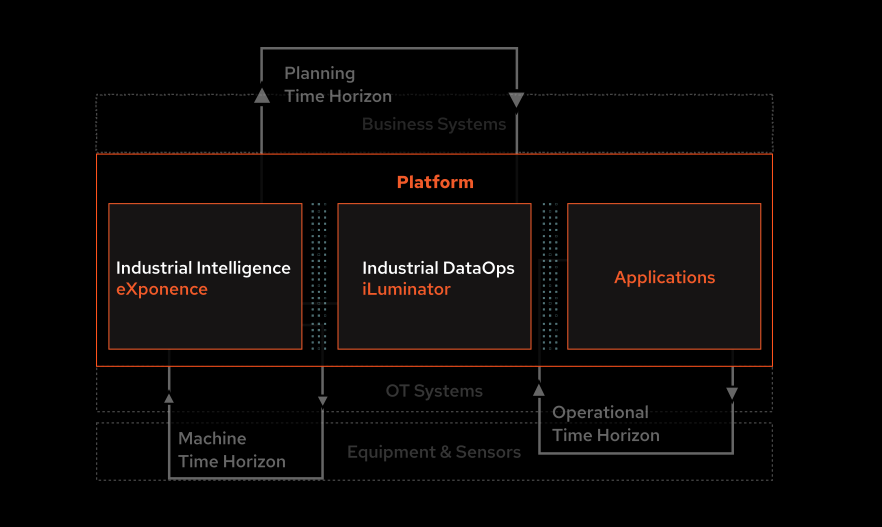
Intelligent MOM systems embed intelligence into every decision layer — from operator tasks to enterprise-wide KPIs.

Automated Root Cause Analysis
Isolate performance issues using AI — before they impact production.

Predictive Batch Release
Use real-time process verification to accelerate batch release.

Continuous Optimization
Achieve predictable, ideal batch outcomes with setpoint guidance from optimization models.

OT-IT Context Unification
Build a unified source of truth — from PLCs to LIMS and ERP.
Automated Root Cause Analysis
Isolate performance issues using AI — before they impact production.
Predictive Batch Release
Use real-time process verification to accelerate batch release.
Continuous Optimization
Achieve predictable, ideal batch outcomes with setpoint guidance from optimization models.
OT-IT Context Unification
Build a unified source of truth — from PLCs to LIMS and ERP.
Achieve consistent outcomes across shifts, campaigns, and plants.
Data, context, models, and decisions can be validated for GxP with native protocol implementation.
Serve quality, process, and operations with trusted, ready data and intelligence.

Real-time contextualization, predictive insights, and decision guidance unlock the intelligence in your data.
Build decision-ready data sets for every perspective – operations, quality, R&D.
Apply AI/ML to detect anomalies, predict failures, and optimize yields.
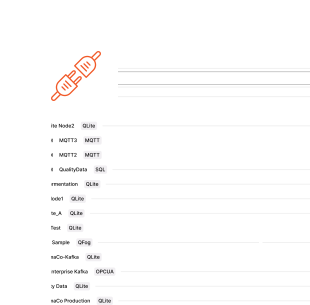
Integrate seamlessly using OPC-UA, MQTT, Kafka, GraphQL, and MCP.
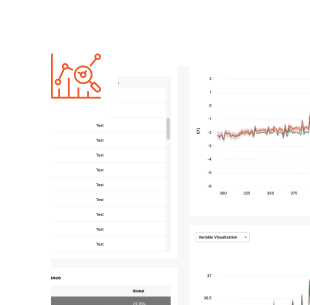
Deliver AI-powered recommendations directly into live workflows for faster operational decisions.


Action recommendations delivered directly to operators.

Detect hidden signals of deviations and drift in long cycle processes.

Use objective Optimization models that reveal causes of poor outcomes, so you can intervene with confidence.

Asset- and process-type-specific alerts.
 Intelligent MOM